
Explore the value of comprehensive Stroke Nursing Care Plans through this in depth guide.
By Harriet Murray on Jul 23, 2024.

A cerebrovascular accident, commonly referred to as a stroke, is a medical event that occurs when blood flow to the brain is compromised. The event can be classed into either an ischemic stroke, where a clot blocks the blood flow to the brain, or a hemorrhagic stroke, where there is a burst artery causing sudden bleeding in the brain. This may occur as a result of an aneurysm, high blood pressure, or trauma. Blockages that dissolve before causing major damage are referred to as transient ischemic attacks, and a patient who has had these in the past may be at a higher risk of having a stroke in the future.
PDF Template Example PDF
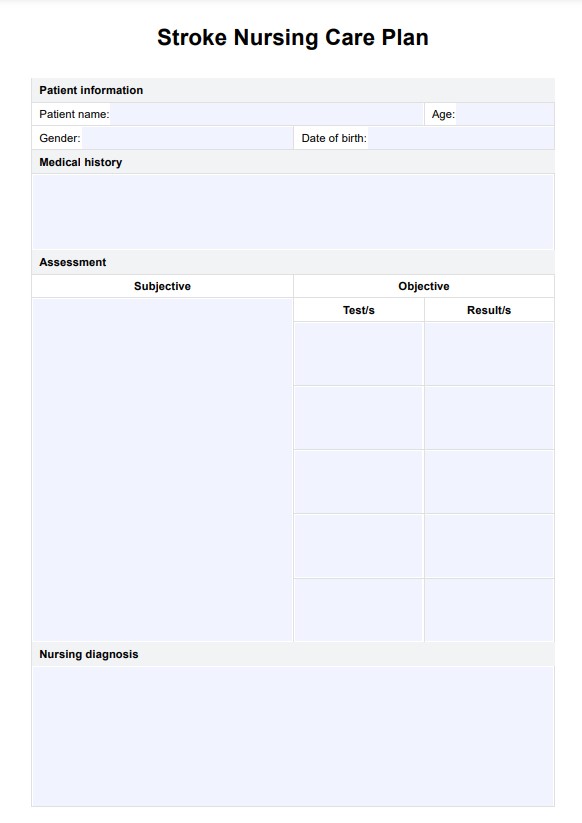
A Stroke Nursing Care Plan is a comprehensive outline of interventions and strategies designed to support patients affected by a stroke. It aims to promote recovery, prevent complications, and enhance their overall well-being. The importance of such a plan cannot be emphasized enough due to the critical nature of stroke, its potential for debilitating effects, and the need for specialized and attentive care.
Since immediate nursing interventions following a stroke are crucial to stabilizing the patient and preventing further damage, a stroke patient nursing care plan that can expedite the evaluation and result recording process is especially helpful. In it, one can find adequate space to write vital signs and neurological status that can help identify the stroke's type and location as well as the timely actions done, such as providing oxygen if needed and monitoring for any signs of deterioration during the acute phase.
Once the patient has passed the acute phase, nurses can use the template to record pertinent information such as risk factors, expected findings, laboratory results, diagnostic procedures, and immediate safety considerations. All of these are needed to facilitate rehabilitation and prevent complications.
A Stroke Nursing Care Plan is indispensable in providing comprehensive, holistic, patient-centered care. It addresses acute medical needs, supports recovery and rehabilitation, prevents complications, and empowers patients and their families with the knowledge and tools needed for optimal recovery and long-term stroke management.
To ensure that you make the most out of our Stroke Nursing Care Plan template, here's a step-by-step on how to utilize our resource:
Stroke Nursing Care Plans are a valuable resource and essential to keep on hand. Make sure that you have a copy of the free printable PDF when the need arises by either clicking the “Download Template” or “Use Template” button or by searching “Stroke Nursing Care Plan” on Carepatron's template gallery's search bar on the website or app.
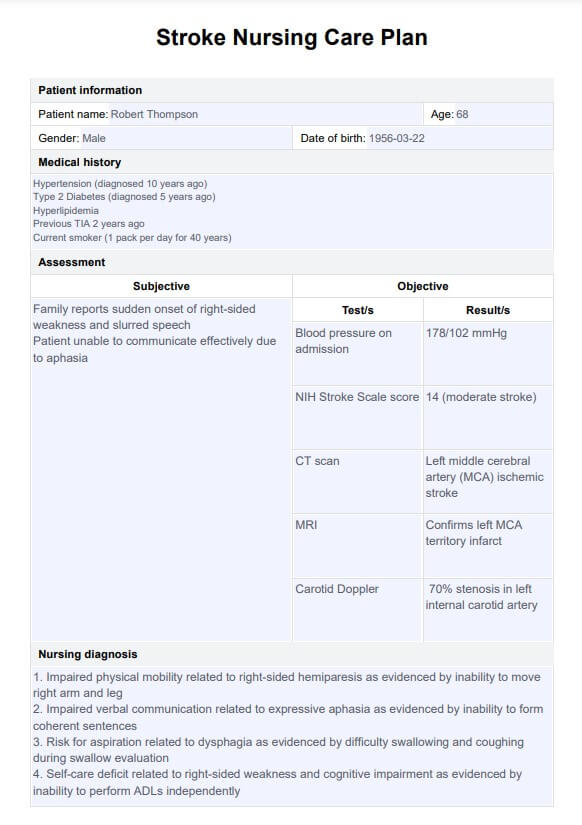
Once the patient has been diagnosed and assessed for stroke, you can use the Stroke Nursing Care Plan Template to ensure all goals of care are met, from assessment to symptom management. Make the most out of it by including the nursing diagnosis you made based on the patient's condition and the next steps you took so other patient care team members have a future reference when crafting individualized treatment options.
Should you need assistance, here's a list of what you must prioritize:
Please note that during the acute phase, the focus is on survival and complication prevention, so certain interventions, such as respiratory support, cautious positioning, vital sign monitoring, etc., will be prioritized.
After reviewing the Stroke Nursing Care Plan and creating a viable and individualized plan for the patient, you need to secure the plan in Carepatron. Our clinical documentation software ensures that all relevant medical records are easily accessible to relevant parties via Carepatron's centralized workspace and can be safely stored and collated for ease and security.
The results of a stroke can vary widely based on several factors, all of which should be considered and included within the care plan. The results of a stroke encompass a wide spectrum, ranging from mild, temporary symptoms to severe, lasting disabilities. During the assessment, nurses must consider including information on the following factors in the stroke care plan:
A Stroke Nursing Care Plan is implemented across various stages of stroke care and can be utilized in multiple settings, some of which are outlined below:
Immediately following an acute ischemic stroke, a subset of ischemic strokes, in emergency departments or intensive care units, a nursing care plan is crucial. It provides information on stabilizing the patient and monitoring vital signs, which are needed before nurses provide acute interventions like deep vein thrombosis (DVT) to prevent further damage or complications.
For stroke survivors admitted to specialized rehabilitation units, a care plan guides nurses in facilitating recovery through mobility exercises, therapies, and ongoing monitoring to improve functional abilities and regain independence.
Patients who require extended care due to health implications and changes post-stroke benefit from tailored care plans in long-term care settings. These plans aim to maintain quality of life, prevent complications, and provide ongoing rehabilitation.
Once discharged, stroke survivors often receive care at home or through outpatient services. Nursing care plans help transition from the hospital to home by guiding medication management, rehabilitation exercises, lifestyle modifications, and monitoring for any signs of complications.
Nursing care plans are also utilized in stroke prevention programs. Nurses educate at-risk individuals about lifestyle changes, preventive measures to reduce the likelihood of future strokes, and modifiable risk factors like hypertension, cardiac dysrhythmias, obesity, smoking, poor control of diabetes, and oral contraceptive use.
Care plans extend to supporting and educating family members and caregivers. They help understand the patient's needs, provide care at home, recognize signs of complications, and access resources for continued support.
